Bleeding gums: the sign you shouldn't ignore
Bleeding when you brush, red or receding gums, persistent bad breath or a loose tooth are all signs of gum disease. It begins as gingivitis, a reversible inflammation, and if left untreated it progresses to periodontitis, in which the bone that supports the teeth is silently lost.
Periodontal treatment: the stages
- Diagnosis: a full periodontal examination, measuring the gum pockets, and X-rays to measure bone loss.
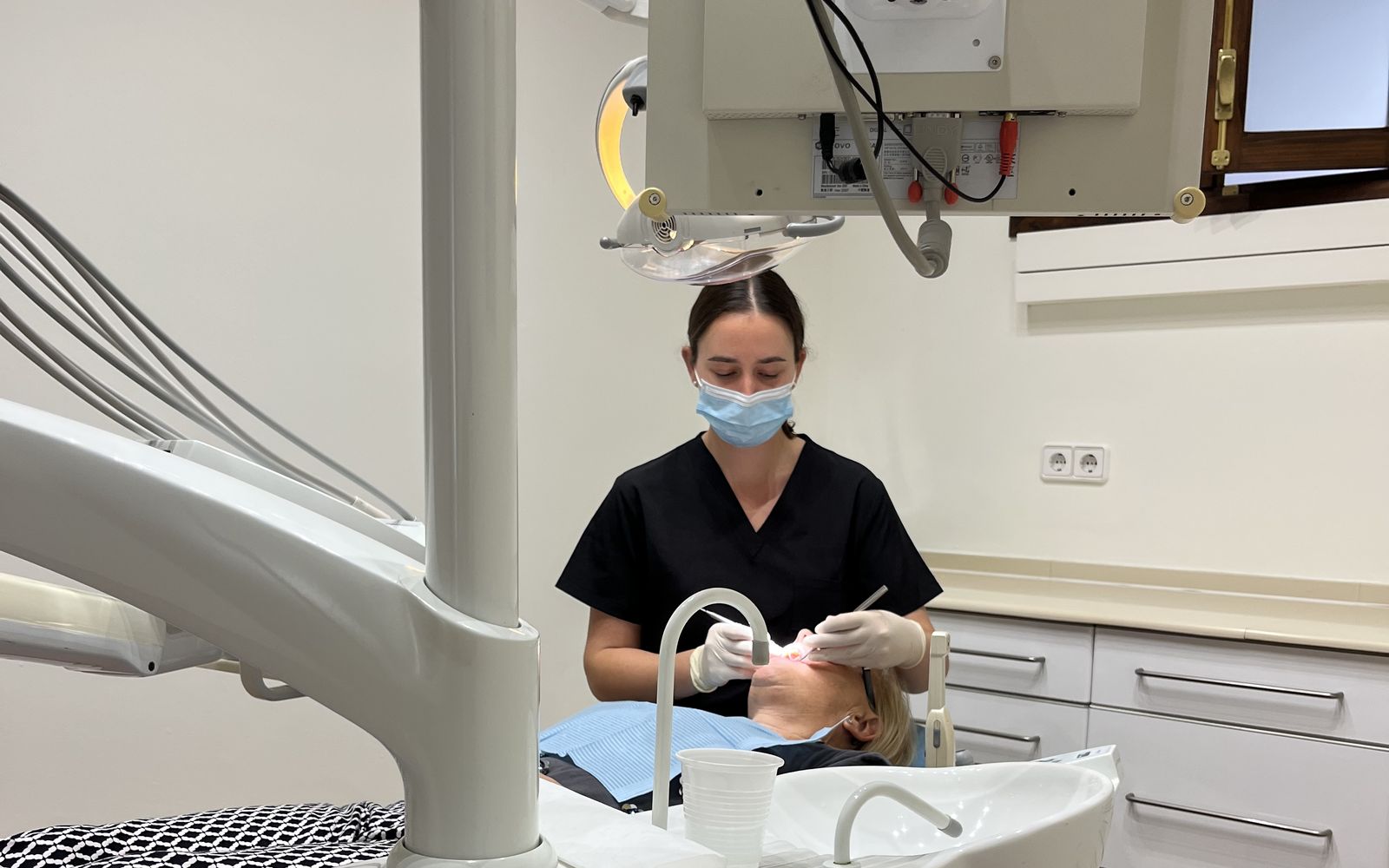
- Scaling and root planing (deep cleaning): a deep clean below the gum line, under anaesthetic, in one or more sessions by quadrant.
- Reassessment: after 6-8 weeks we check how the gums have responded.
- Periodontal surgery: only in advanced cases, to reach the deepest pockets or regenerate bone.
- Maintenance: visits every 3-6 months to stop the disease coming back.
Periodontitis and general health
Periodontitis is linked to diabetes, cardiovascular disease and premature birth. Treating it means looking after much more than your mouth.
Periodontal care in Santa Maria del Camí
If your gums bleed or you have been told you have gum disease, book an assessment. The sooner we act, the more teeth are saved and the simpler the treatment.
What you gain
- Halts bone and tooth loss
- Stops bleeding and bad breath
- Deep cleaning under anaesthetic, pain-free
- Personalised maintenance programme
Frequently asked questions about gum treatment in Santa Maria del Camí
Can advanced gum disease (periodontitis) be cured?
Periodontitis can be halted and kept under control indefinitely with treatment and regular maintenance, although the bone that has been lost cannot always be recovered. That is why early diagnosis is so important.
Does deep cleaning hurt?
It is done under local anaesthetic, so it doesn't hurt. For a few days there may be some sensitivity to cold, which gradually disappears.
How long does periodontal treatment take?
The initial phase is usually completed in two to four sessions. After that, maintenance visits take place every three to six months depending on the case.
Can I have implants if I have periodontitis?
Yes, but the gum disease must be treated and brought under control first if the implants are to succeed in the long term.